Tipping in Italy: all you need to know. When to tip, when not to and why the difference matters
All you need to know about tipping in Italy: when to tip, how much to leave, how to do it. [Updated in 2026]
Tipping in Italy is a common gesture to show appreciation for services received and, during your travels, you will likely see people tipping in cafes, restaurants and other selected situations.
However, leaving a tip is not as widespread a practice as, for instance, in the United States and it very different when it comes to the amounts expected and the situation in which tipping is considered appropriate.
Even when it is done, the amount given is often lower than what you may be used to back home.
Deciding how much to leave as a tip in Italy is a delicate act for you and for the professional you are tipping.
For you as I know that if you come from a high tipping culture, not leaving a tip may genuinely make you very uncomfortable (but bear with me, see below why it is good to do it our way while in Italy!)
For the professional as a tip can easily come across and condescending or that you are feeling sorry for them
Not knowing how much to tip can be stressful so, today, I have put together this guide that I hope answers all your tipping in Italy questions.
We will look at:
- Tipping etiquette in Italy
- When it is appropriate to tip in Italy
- How much to tip in common situations you may encounter during your Italian vacation.
Tipping in Italy TL;DR
As a general rule, in Italy, WE DO NOT TIP FOR PAID SERVICES the same way as in the US.
This means that we do not tip taxi drivers/ chauffeurs, tour guides, golf cart drivers or any other professional whose services you have paid for: all these professionals are paid for their work and their salary is covered by the cost of the service you have bough.
The only time we leave a small gratuity is often at a restaurant, in the form of few euro at the end of the meal (see below). This is never compulsory, but it is common especially in Rome and the South.
Why it is important to tip like Italians
Following Italian tipping rules is important.
Let me state this again: In Italy, we do not tip for paid services, with very few exceptions and nuances. And this is why:
One of the reasons why tours in Italy are expensive is that their cost also covers the salary (and all the tax and relevant protections that come with a salary) of the people who provide the service.
Tipping on top of this salary is therefore not only unnecessary but potentially problematic.
First of all, tipping generously gives an excuse to the employers to pay professionals less, since ‘they’ll get tips anyway’. This is not right!
A salary comes with protections while tips do not: by tipping generously, you feel you are doing right to them but in reality, but contribute to them having less protection and less right to negotiate a proper salary with their employer.
Also, it may come across as rude: tipping them basically tells them you have reason to believe they are not appropriately paid
Last but not least, and this is crucial: cash is untraceable and never gets taxed.
With the level of tourism we get, what may seem like a general gesture to you, is a way to contribute to tax evasion which is rampant in Italy as tips amount to rivers of untraceable cash. Untraceable cash means that the few that pay tax (because they get paid above board) have to bear the burden of those who wrongly do not.
I know the individual transaction may seem inconsequential: but can you imagine the level of submerged cash if each person pays 20% cash on top of a tour priced in the hundreds? Scale matters.
If you want to be a respectful, sustainable visitor, please follow local tipping rules.

What is the rule for tipping in Italy?
The rule about tipping in Italy is that we do not tip for paid services, with very few exceptions.
In restaurants in the South especially (Rome and below), leaving a tip at a restaurant for instance is a courteous gesture that shows the person who provided a service to you, that you appreciated their help.
Leaving a tip is entirely up to you and never mandatory.
However, there are situations when not leaving a tip can come across as rude and a sign that you were unhappy with what you got and since no one is expected to know how each place does it, my rule of thumb for tipping in restaurants is: if happy with the experience, tip (see below how much is appropriate)
Careful though as we never tip the owner of a business. So, context matters.
In other contexts, is is more about nuances and since tipping in Italy is not mandatory, you will find local people tipping differently from each other, based on family habits and where they grew up.
I am from Rome and I always tip at the end of a meal if I am happy.
I also often round up the change for taxi drivers (if they are nice, and I literally mean a ‘keep the change’ situation if I pay a 9 euro ride with a 10 euro note); I tip junior staff at the hairdresser I go to regularly and the (literally) poor immigrant at the petrol station if they go above and beyond helping me with something.
For this guide, I put together what I do and what I have observed to be the most common practice from friends and visitors.
When to tip in Italy and how much to tip: overview
| Where you are | Is tipping common? | How much to tip | How to do it |
| Restaurant | Yes | A few Euro, up to 10% of the bill for a larger group | Leave cash on the table when leaving |
| Coffee at a ‘bar’ | No | Up to 20c | leave a coin in the tipping jar if available or hand the coin when placing your order |
| Brunch, sit down breakfast, small sit down meal, aperitivo with food, etc | Yes | 1-2 Euro, up to 10% of the bill for a larger group | Leave cash on the table when leaving or tell your waiter to keep the change |
| Taxi drivers (short trips) | No | Round up the charge up to a couple of euro | Tell the driver to keep the change or give cash |
| Tour guides (free tours) | Yes, since this is not really a tip, more a ‘pay what you want’ type arrangement | Whatever you feel appropriate for the service you go | Cash at the end |
| Tour guides (paid tours) | No | This is not an Italian custom. US visitors tend to tip like back home but there is no standard rule as in Italy it is not done | |
| Hotel porters | Yes | 1 Euro per bag or so | Cash |
| Hotel housekeeping | No, but appreciated for longer stays | No standard amount | Cash at the end of the stay, to the person or via the reception desk |
| Hairdresser | Junior staff only | 5 Euro | Give cash to the person who did your hair after settling your bill at reception |
| Petrol station | Only for extra services such as checking your oil or tire pressure, clean glass etc | Up to a couple of Euro | Cash |
Tipping in Italy: when not to do it
In the vast majority of paid transactions, in Italy you do not add a tip. The situations above are examples of when a local may tip but none of them is an absolute rule since no one relies on tips for a living.
A good thing to know is that in Italy, we also do not tip the owner of a business.
At the hairdresser’s, you may leave tip to the junior member of staff doing your styling but not to the owner who has their name on the salon door.
The same goes for small business owners such as owners of guesthouses or family restaurants
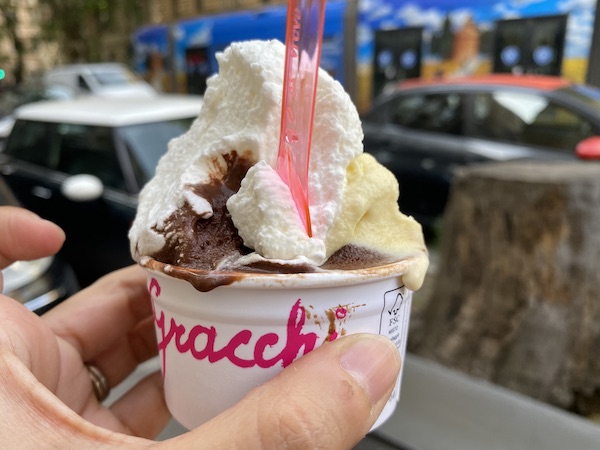
We also do not tip for gelato or street food (it is kind however to tip for food delivery to your home).
We also never leave a tip if we are unhappy with the service.
If you are less than satisfied with the service, never feel obliged to leave a gratuity: the service you paid for covers the salary of the person who worked for you.
Anything on top of it is a sign of appreciation and of outstanding service: only leave it if you feel it is deserved.
How to tip in Italy
You usually leave a tip in cash, even when paying by card.
In many cases, it is not possible to add your gratuity to the bill on the card machine as the amount needs to match the one on the till.
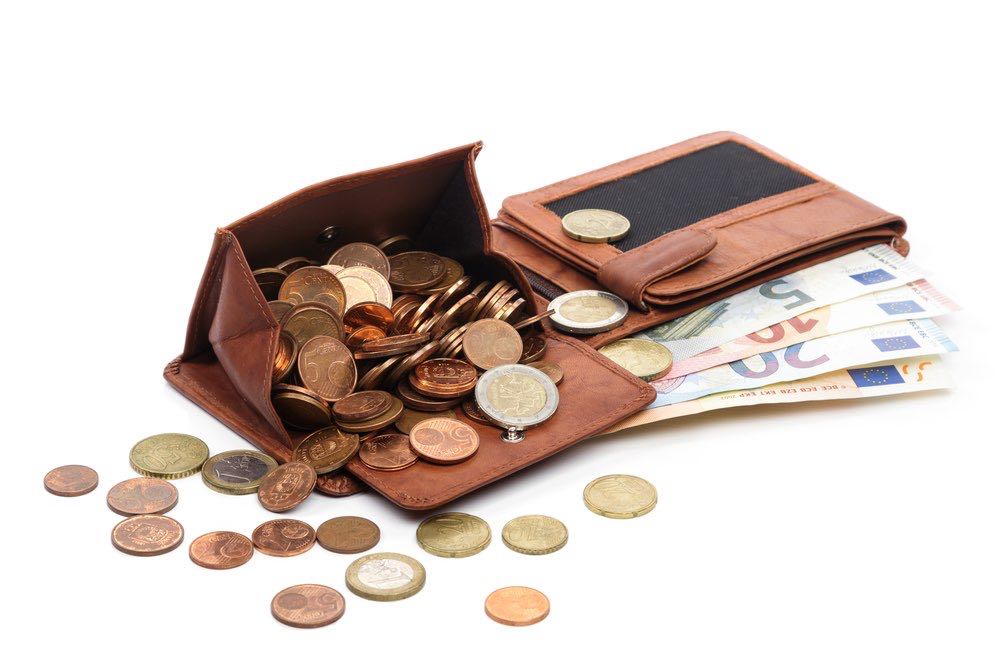
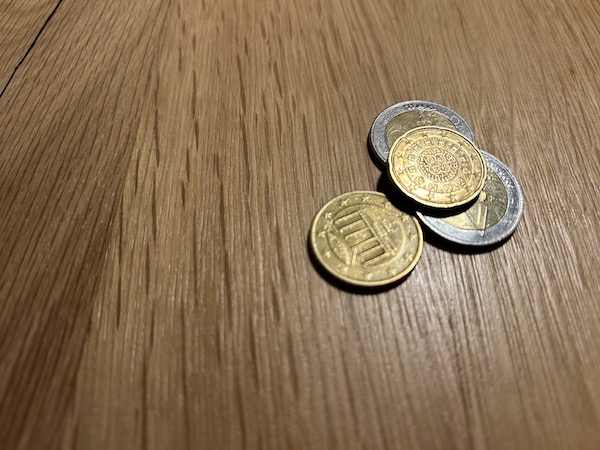
It is good practice to keep change on you: if possible, opt for larger coins (50c, 1 and 2 Euro) over coppers. To avoid coming across as rude or condescending, do not leave a handful of 1c or 2c Euro coins and don’t go overboard with big notes for small services.
20 or 50 Euro notes are big amounts and can be voluntary payment towards a free tour, but they are too much as a gratuity.
Tipping your tour guide
Tour guides in Italy are paid professionals and therefore we do not tip them.
They are trained professionals, very often owners of their own business (even if they work under the umbrella of a bigger operator) and their salary is covered by the high cost you have already paid for your tours.
Sometimes, since they know that Americans come from a different tipping culture, they will put pressure on you to leave a tip and guilt trap you. Please, do not fall for this pressure and remember what we said above tax and salary protections!
Free tours usually count on voluntary contributions so this is not a tip: is whatever price you think the service you received deserves.
Tipping taxi drivers in Italy
Tipping taxi drivers is becoming increasingly common in Italy, especially if you get a driver who is particularly helpful with your bags, makes sure you are comfortable during the trip or goes out of their way to get somewhere fast/avoid traffic.
The most common way to tip a taxi driver is by telling them to keep the change. A taxi charge of 9.50 Euro can easily be rounded up to 10.

Tipping private drivers in Italy
Private drivers are paid professionals and therefore we do not tip them. Since these services are often used by Americans, you will see many people reporting that they did tip but please if you do, remember why we ask you NOT to tip the way you do back home. A small gratuity is ok (many locals in this case would maybe offer coffee during a break or similar), while a large tip is a way to force on us a use we are fighting.
Tipping in Italian restaurants
I always leave a tip at the end of a nice meal in an Italian restaurant.
The amount depends on the bill total, how happy I was with the meal and the type of restaurant you are at.
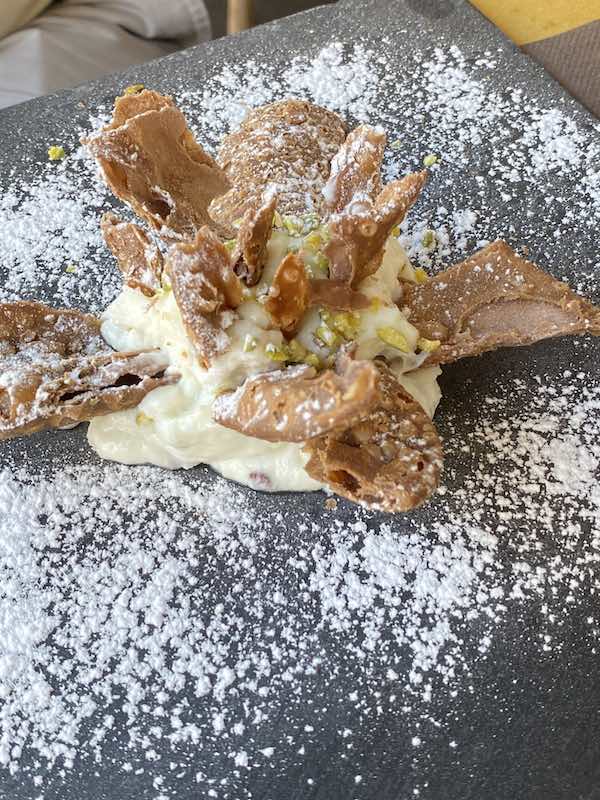
In general, I find myself leaving a couple of Euro for smaller meals or telling the waiter to keep the change.
You may go as high as leaving close to 10% of the bill however, this would be considered rather generous unless you are in a high scale establishment: do not feel pressured into it by what you may be used to back home.
To give a practical example, if you have a restaurant bill of 37 Euro, it would be common to leave 40 Euro and just not ask for change.
It would also, however, be acceptable to leave just a 2 Euro coin, for instance, if you are paying by card and this is what you have handy to leave on the table.
Need to know! You often read articles saying that you don’t tip in Italian restaurants as the tip is already included in charges such as ‘coperto’ (cover charge) or ‘servizio’.
This is not entirely correct.
‘Coperto’, is not a charge that goes to the waiter but a charge that covers the space used during the service and things such as use cutlery, tablecloths etc.
‘Servizio’ on the other hand is a service charge. Servizio goes to the owner, not the staff, but it is common not to leave a tip if services is included.
‘Coperto’ on the other hand has no bearing on your decision to tip or not.
Coperto is a controversial charge.
It dates back from the Middle Ages and makes little sense nowadays, so much so that conversations are ongoing about banning it entirely.
Lazio, the region of Rome, has banned it (read about tipping in Rome here) and national legislation requires coperto and service charge to be explicitly indicated on the price list. You can find official rules (in Italian) here.
Tipping in Italy when ordering coffee
If you order your coffee standing up at the bar, you do not need to tip.
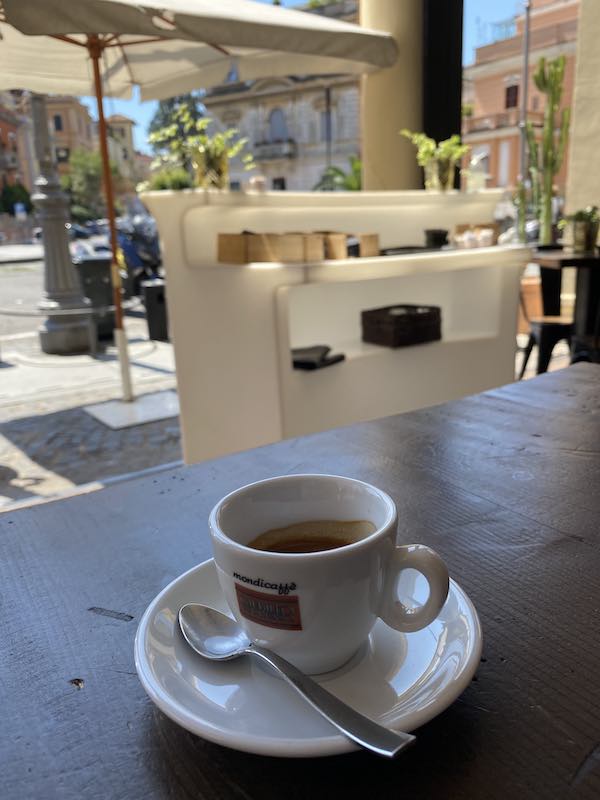
You usually pay for your coffee at the till, get a receipt and then head to place your order: if you got change of 10c or 20c, you can use that coin as a tip, either putting it on the bar with the receipt or dropping it into the tipping jar, if available.
I personally never tip for coffee however, you may come across locals who do, although the use of card payments means even this habit is now very much disappearing. Either approach is ok.
Tipping in Italian hotels
Tipping in Italian hotels is not common for short stays, in B&Bs and guesthouses and not a rule for long stays.
However, in bigger hotels with a porter, a waiter who regularly serves you at meals or in the case of longer stays, tipping is appreciated.
A tip of 1 Euro per bag to the porter is common and for a longer stay is a nice gesture towards a waiter who looked after your consistently during the stay or for an outstanding housekeeper.
For instance, we are recurring clients to a specific hotel and stay for up to 2 weeks at a time: we usually leave 50 euro to reception to split among the staff. This is by no means mandatory.
I hope you found this essential guide to Italian tipping rules useful. Safe travels!
Planning a trip to Italy? Don’t forget to also check out our 100+ Italy travel tips and our guide to planning a first trip to Italy!


Marta Correale
Marta Correale is an Italian mama of two. Born and raised in Rome, Marta has a passion for travel and especially enjoys showing off Italy to her kids, who are growing up to love it as much as she does! A classics graduate from the University of Rome, Marta channeled her passion for culture and travel into the creation of family travel websites that inspire, support and help curious visitors to make the most of a trip to Italy and learn about Italian culture on the way. Marta also manages the thriving online community of parents 'Italy with kids' who turn to her for expert advice and competent Italy travel planning support. She is the author of the travel guides 'Best of Rome with kids' and 'Best of Florence with kids' available on Amazon and of an array of kids printables (scavenger hunts, info booklets etc) available on her Etsy shop 'Mama Loves To Print'