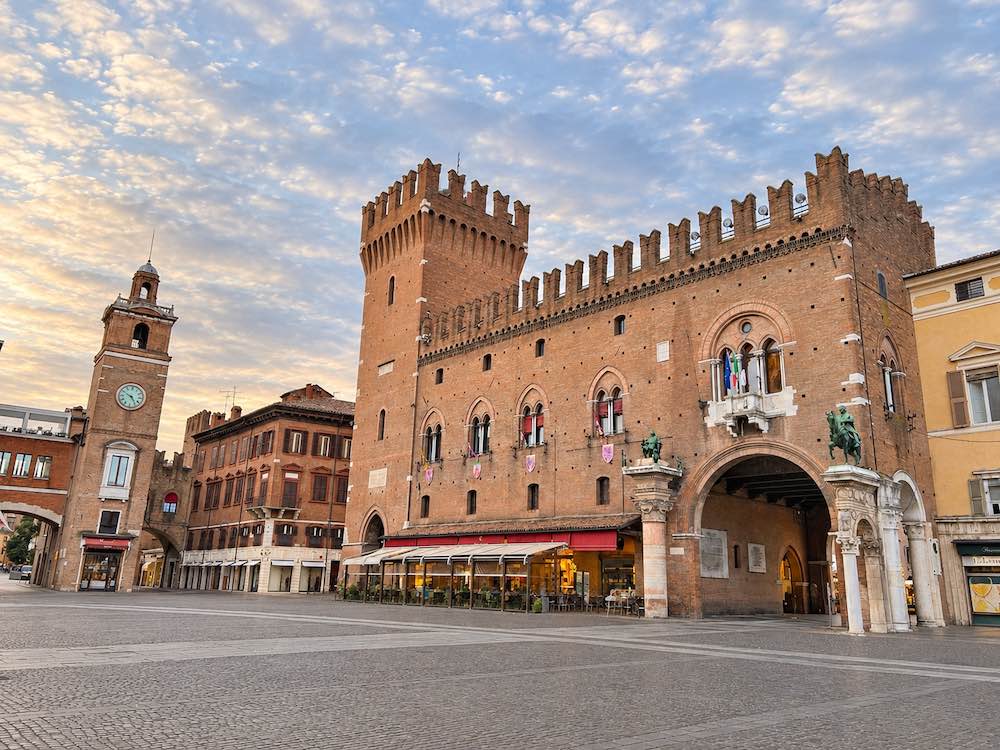
Ferrara, Italy: all you need to know to plan a trip and why you’ll love it
All you need to know to plan a trip to Ferrara, Italy: the best things to see, where to east, where to stay, why I recommend you visit this beautiful and historic town in the Northern Italy.
The historic city of Ferrara does’t often appear on Italian itineraries for first timers, yet it is one of those places where you still find that all the beauty, charm and historical feel Italy is famous for, but also that calm and tranquility typical of off the beaten track places, now rarer and rarer in Italy.
I am just back from a short trip to Ferrara, and while I knew the city would be beautiful, I had underestimated how pleasant, soothing and enriching being a place fully off the beaten track can be.
In Ferrara, we were fully able to explore with no plans or schedule at all, we saw incredible art, ate amazing food and almost had the feeling of being in Italy as it used to be many years ago, yet still with all the comfort and facilities, of course, of a modern city.
One of the questions I receive more often, from visitors and families especially, is if I can recommend a small town they can call home for a while, where they can immerse themselves in local life, walk to restaurants and enjoy life away from the maddening crowds. Ferrara is all of this and more!
This is my essential guide to Ferrara, my tips for visiting and top recommendations. I hope you enjoy it!
Please note: this post contains affiliate links. Should you make a purchase thought them, we might make a small commission, at no extra cost to you.
Essential travel guide to Ferrara TL;DR
Ferrara is a historic, small city in the north of Italy, in between Bologna and Venice
It has a beautifully preserved historical center, a stunning castle, duomo and important palazzi fantastic for art lovers
Ferrara city center is small, walkable and with a mellow atmosphere, and it is very family friendly. Kids are welcome everywhere and while we didn’t do anything specific for children, we found the city safe, easy to enjoy, and equipped with several playgrounds.
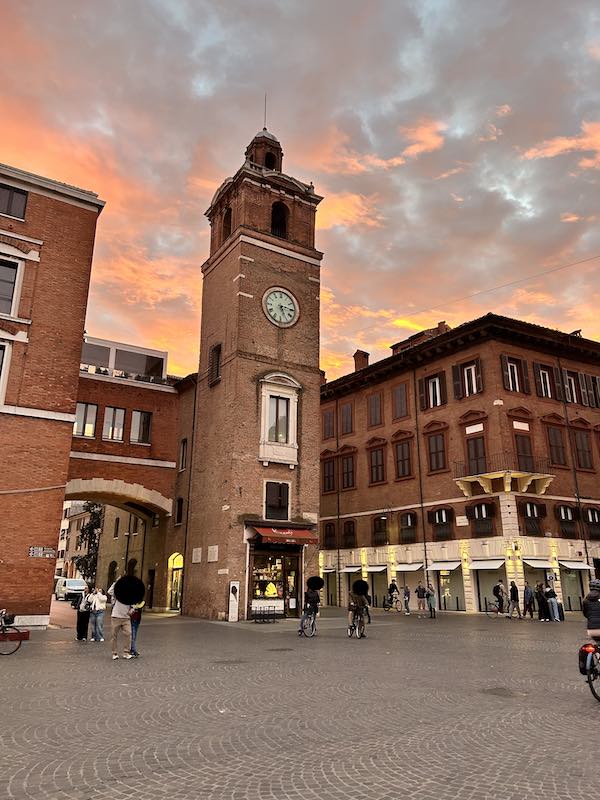
The city is easily reached by train and can also work as a base for exploring the area around it
Ferrara is quiet and historic. The city has many restaurants and cafes but the dominant feel here is that of slow living.
Ferrara is ideal for those looking for a mellow, calm town to visit as a day trip from Bologna or Verona or for people looking for a place to call home for a while, to work from home, or to slow down and just be.
You can visit Ferrara’s top landmarks in a day or two. The best seasons to come are spring and autumn; summers tend to be very hot and winters tend to be grey, while the mid seasons are usually bright and pleasant.
Ferrara: quick history, significance and feel
Ferrara is an ancient town dating back to Medieval time: its foundation is said to date back to the VII century and this medieval origin is still very much visible in the main layout of the city.
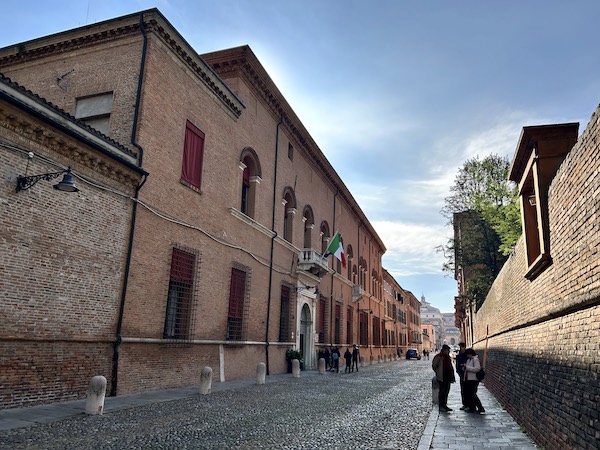
As you stroll the city center, you find yourself walking in a maze of meandering streets with cobbles, porticoes and brick buildings, suddenly opening up to small and big piazzas, where city life still seems to come together around the tables of outdoors cafes or market stalls.
Ferrara city center is beautiful, atmospheric and still maintains many of its original features and even hang outs: here you find pretty Via delle Volte, the original drinking hole where Copernicus used to go for a drink (!), the stunning Duomo of Ferrara and the incredible Castello Estense, the castle Ferrara.
But while the Middle Ages gave Ferrari is main layout, it is the Renaissance when Ferrara truly shone and it acquired many of the top landmarks we see today.
During the XIII – XVI century, Ferrara was under the control of the Este family, one of the wealthiest and most powerful at the time, and there patronage to artistic and architects meant Ferrara grew in prestige and beauty.
The city acquired new, modern-for-the-time neighborhoods such as the famous Addizione Erculea, several important palazzi such as Palazzo Schifanoia and Palazzo dei Diamanti and it also became residence of choice of poets and artists such as Ariosto and Tasso, giants of Italian literature.
This strong historical and artistic significance is still very much at the heart of how Ferrara feels todays.
The town center has lovely cafes, outdoors restaurants and pretty markets, so it is very much a living and breathing city, but I fell in all parts of the center, history is very much alive and the city does’t seem to have been swallowed by chains of shops and restaurants.
Overall, it felt to me as if the center of Ferrara had a beautiful yet a slightly melancholic feel to it.
I think it is particularly enjoyable for people who love leisurely strolls or love cycling in historic settings: bicycles here are ubiquitous and very much the local means of transport of choice!
The best things to see in Ferrara
Ferrara city center
Like it is often the case in Italy, the top thing to see in Ferrara is Ferrara itself!
As I mentioned above, Ferrara is a historic town and, as such, it is more than the sum of its parts: wandering around its town center is an attraction in itself, doesn’t need any planning, and will fully immerse you in Ferrara atmospheres.
as you wander, I recommend you keep an eye out for the following places:
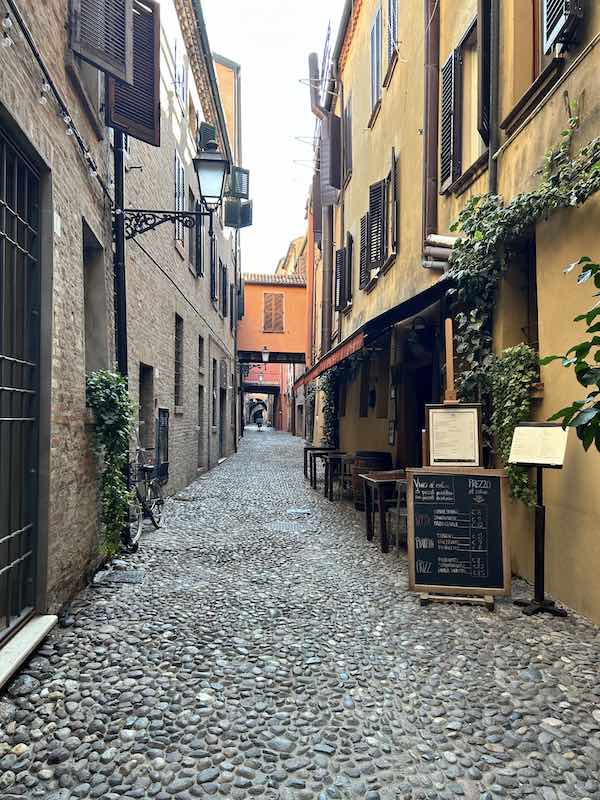
Via delle Volte – Via delle Volte is a long, atmospheric street with many arches (volte) and passageways that once connected the port to the castle to facilitate trade and provisions.
Nowadays, the street is quiet and home to the occasional historic restaurants, but stays as one of the most photogenic corners of Ferrara, with pretty brickwork, climbing plants and hidden watering holes and restaurants for dinner with local specialties.
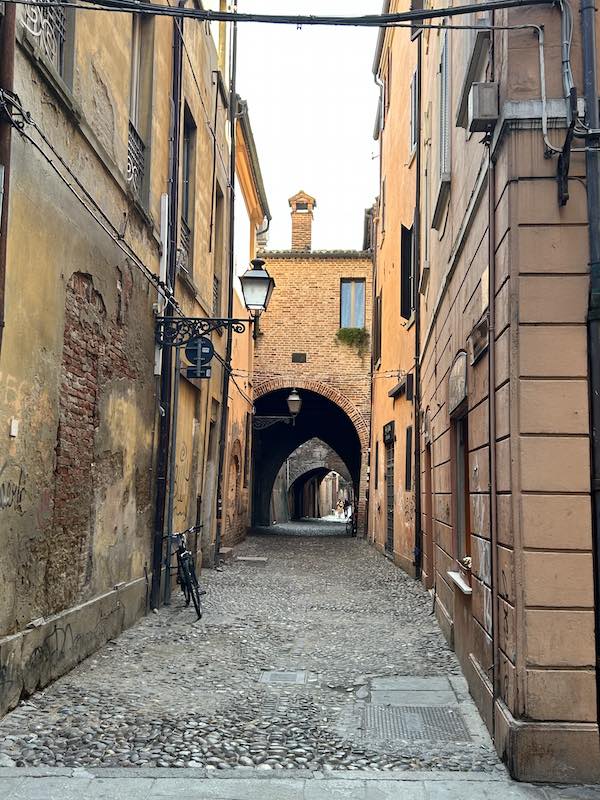
Piazza del Duomo (also see below) – Piazza del Duomo is the heart of the city, a large Piazza dominated by Ferrara’s Duomo and home to may shops and cafes teeming with life.
The Duomo of Ferrara is peculiar as, along its sides, there are porticoes with shops, which are are unexpected sight! Some are historic, some are very much not so – one sells SIM cards, and there is a McDonald in front…. showing just what I meant above: in Ferrara, ancient and currents coexists side to side!
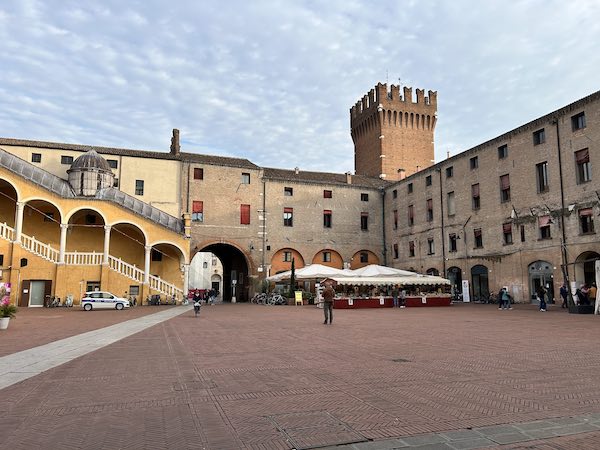
Piazza del Municipio – Piazza del Municipio is maybe my favorite piazza in Ferrara, a beautiful and atmpshepric enclosed piazzas with cafes, restaurants and a books market stall!
This Piazza is just beside Piazza Duomo but has an intimate feel to it and the stunning Este town hall, painted in a beautiful and and unexpected yellow that brightens up the whole space!
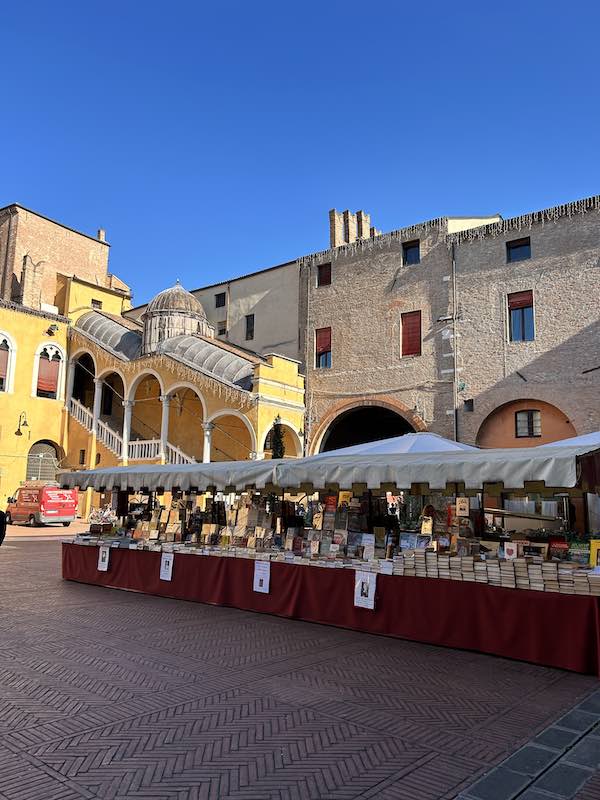
Piazza della Repubblica – PIazza della Repubblica is another lovely piazza in Ferrara city center, which we loved as a lunch hangout. here you have several cafes which, in the good season, have both indoors and outdoors table so you can sit under pretty trees while enjoying your meal.
Like the others, this piazza is just beside the castle and only minutes from the Duomo too.
Ferrara’s ghetto – Ferrara has a long Jewish history, and its historic ghetto is well worth a wonder.
The ghetto dates back to 1624 and is interesting to explore on your own; however, since many of its most interesting sites are hidden to the eye of the passerby, this is the one part of the city I recommend to explore with a specialised tour, rather than alone.
Ferrara’s Duomo
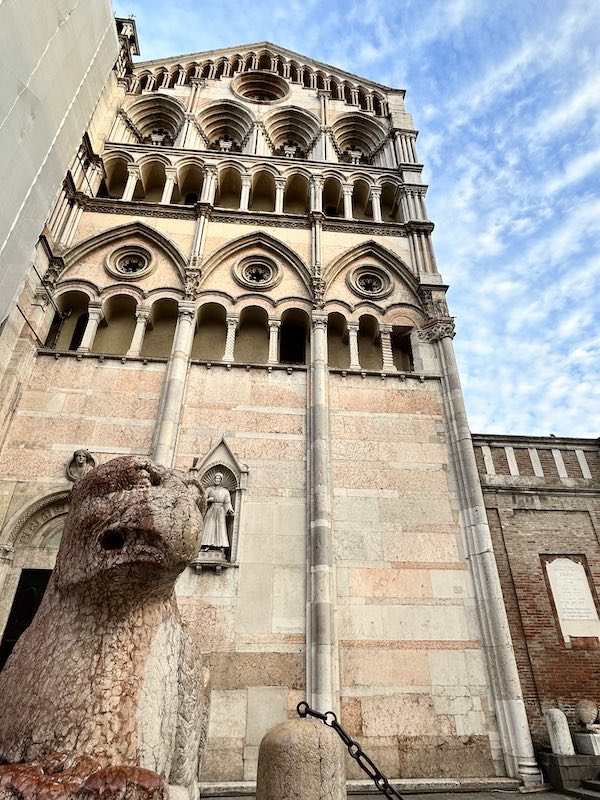
Ferrara’s cathedral, the Cattedrale di San Giorgio, is a beautiful mix of Romanesque and Gothic styles that dates back to the twelfth century.
The Duomo has pale marble facade, with three tiers of arches and sculpted details, which is the real showstopper: you are first welcome by a gargoyle-style creature manning the door, itself quite a sight!
But as you look up, you are guaranteed to marvel at the seemingly infinite rows of columns that make up it main decor there.
When we went, the main part was covered up for restoration, but I a told it has a Last Judgment scene above the main portal worth seeing.
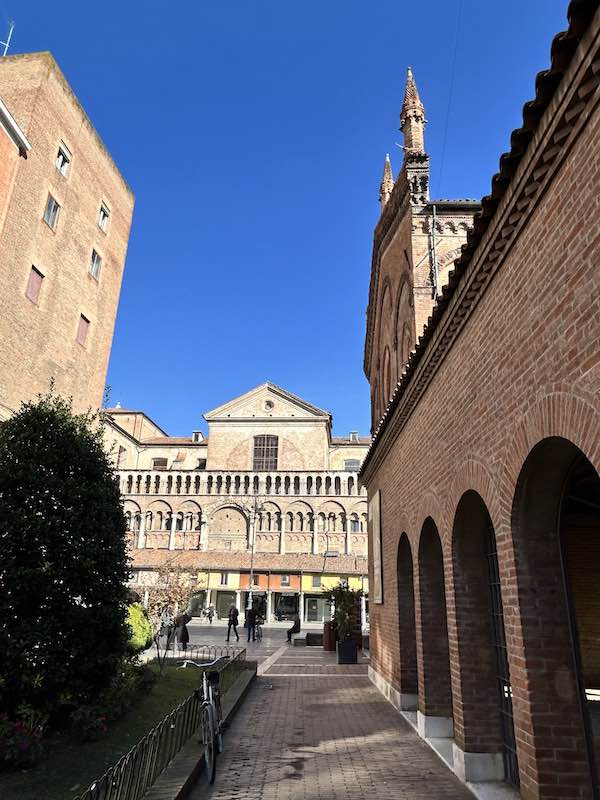
The inside is calmer and more subdued. The Duomo is open to the public and you can just walk in: the visit, for the occasional visitor like us, won’t take more than a few minutes.
The Duomo is right in the main square, so you will pass it many times during your stay. Try to see the facade at different times of day, as the light changes its color completely.
Ferrara’s Estense Castel
The Castello Estense is the symbol of Ferrara, and it is hard to forget your first sight of it.
A proper medieval castle with four towers, it rises straight out of the middle of the city, surrounded by a moat and a drawbridge. It was built in the late fourteenth century as a defense for the Este family, and over time it was transformed into their elegant court residence.
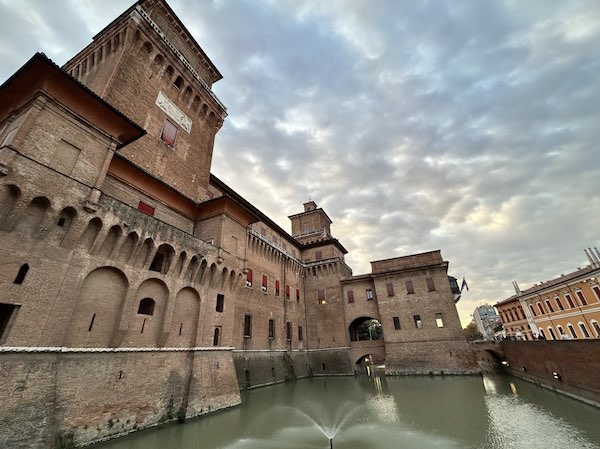
Inside you can visit the grand rooms, the chapel and the private apartments of the Este family, as well as the dark dungeons below.
I recommend you visit with a guide, you can find prices and book here: the tour is well worth it as makes the place come to life with stories and anecdotes.
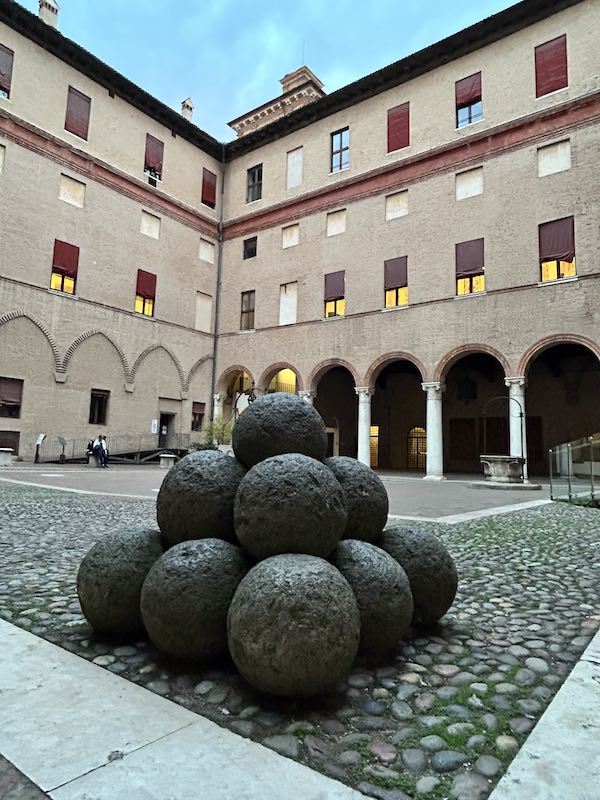
Tip: the castle is lovely to see from the outside too, especially in the evening when it is lit up and the square in front of it is quiet. Like the Duomo, it is in a position that means you’ll pass it several times, which is great to see it under different light conditions, especially because of its moat.
The Addizione Erculea and the Quadrivio degli Angeli
This is one of my favorite things about Ferrara, and one that many visitors miss.
At the end of the fifteenth century, Duke Ercole I d’Este commissioned an enormous expansion of the city to the north, designed by the architect Biagio Rossetti.
The result, known as the Addizione Erculea (Herculean Addition), is often described as one of the first examples of modern town planning in Europe, with wide, straight streets and carefully planned spaces long before this became the norm. It is a big part of why Ferrara is recognized by UNESCO.
The heart of the Addizione is the Quadrivio degli Angeli, the crossroads where its two main streets meet.
It is framed by three beautiful palazzi, including Palazzo dei Diamanti, and it is a wonderful place to stop and take in how elegant Renaissance Ferrara must have felt.
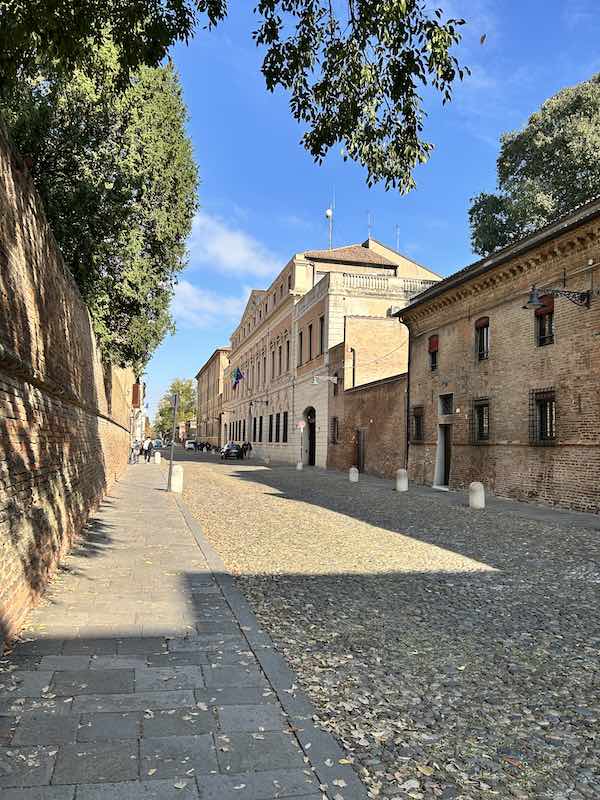
Now, I am going to be honest with you: this one could feel a little underwhelming for some!
The Addizione and Quadrivio are not jaw dropping showstoppers and, if you didn’t know their history, you may just notice they have a different feel to the rest of the city.
But this is very much the type of simple pleasure Ferrara is all about, and they are also where you find Palazzo dei Diamanti, which is one of Ferrara’s most famous landmarks.
Palazzo dei Diamanti
This is one of the most striking Renaissance buildings in Italy, and you will recognize it at once: its marble facade is covered with thousands of pyramid-shaped stones that look like diamonds and shimmer in the light.
It was built for the Este family at the end of the fifteenth century and is part of Biagio Rossetti’s Addizione Erculea.
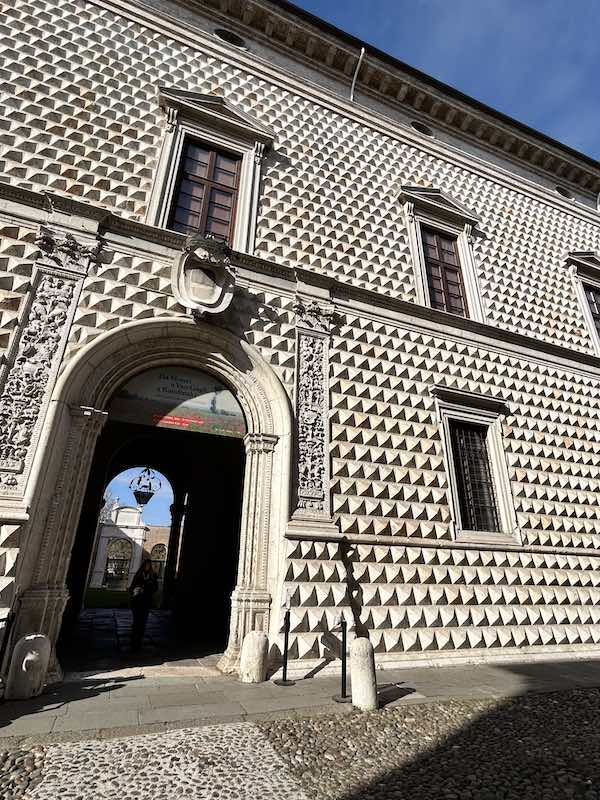
Today the palace houses the Pinacoteca Nazionale, with a collection of Ferrarese Renaissance paintings, and hosts well-known temporary art exhibitions.
Even if you don’t go inside, it is worth stopping by just to admire the facade; you can also get coffee in the palazzo’s cafeteria and brows its pretty museum shops, a great place to pick up artsy souvenirs.
Palazzo Schifanoia
Palazzo Schifanoia is maybe my favorite landmark in Ferrara and one I didn’t even know existed until I went to the city!
The palazzo dates from Renaissance time and its name does not come from a surname, but means something like “escape from boredom,” which gives away its original role: this was the Este family’s pleasure palace, built as a place to relax and enjoy themselves.
The reason to visit is the Salone dei Mesi (Hall of the Months), a large room covered in beautiful Renaissance frescoes that show the months of the year, with scenes of court life, astrology and mythology.
They are some of the most important frescoes of the Ferrarese school, and they are exquisite.
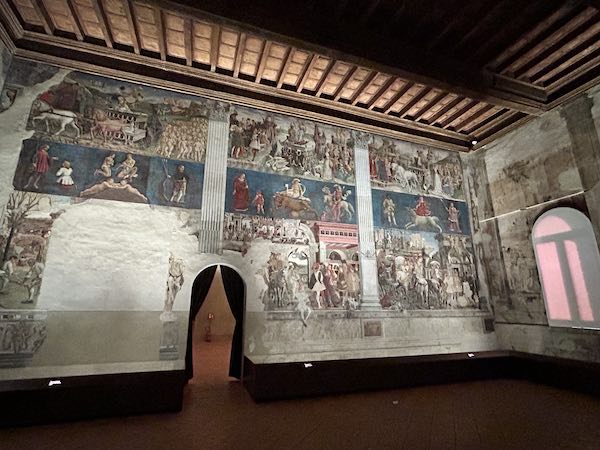
We were able to get tickets for it on the spot and highly enjoyed it: inside, you have two short videos explaining the story of the palazzo and the vicissitudes of the Hall of the Months which are easy to follow and fascinating. I highly recommend a visit.
Good to know: the area around the palazzo is lovely for a wander and has lovely corners perfect for photograph enthusiasts!
Where to eat in Ferrara
Ferrarese cuisine is hearty, rich and deeply rooted in tradition, and it is very different from what you will find in other parts of Italy.
If you can, try some of the local specialties:
Cappellacci di zucca: large filled pasta parcels with a sweet pumpkin filling, usually served with butter and sage or a ragù. They are the signature dish of Ferrara and you literally see on the menus of pretty much any restaurant you pass.
Salama da sugo: a rich, slow-cooked pork sausage, traditionally served with mashed potatoes. It is a dish with deep local roots and a very strong flavor.
Pasticcio di maccheroni: a baked pasta pie in a pastry crust, a dish that comes straight from the Este court.
Coppia ferrarese: the local bread, made in a distinctive twisted shape with crunchy, pointed ends. You will find it at every table.
Pampepato and tenerina: the traditional sweets. Pampepato is a spiced, chocolate-covered cake, while tenerina is a soft chocolate cake with a crumbly crust.
We had several lovely meals in Ferrara. The two places I recommend the most for quality of food are:
Iddu Sicilian Restaurant – t may seem odd to recommend a Sicilian restaurant in Ferrara but this place is so beautiful and the quality of the food so high, I cannot recommend it enough, I’d come back to Ferrara even juts to eat here again!
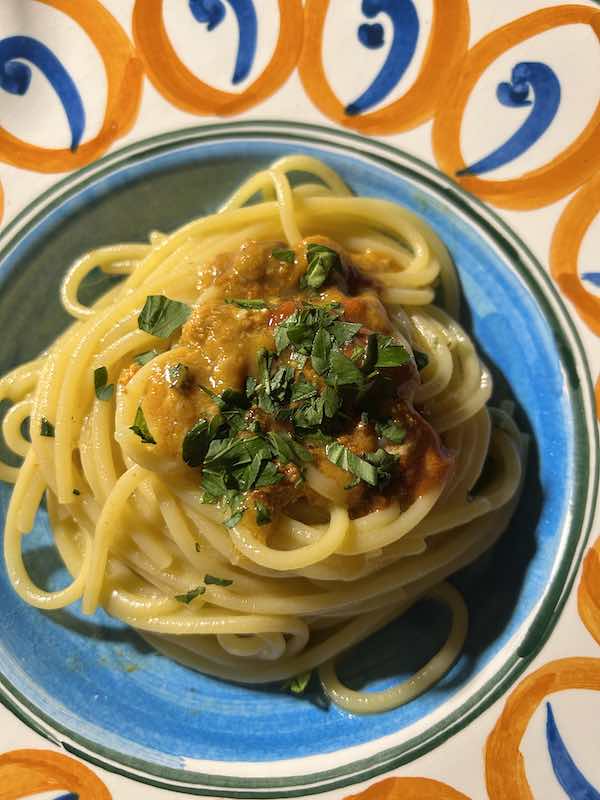
Quel fantastico Giovedì’ – anther delicious restaurant, intimate and refined is Quel Fantastico Glovedi’. The quality of their food is excellent but their fish specialties and win list stand out.
If looking for a quick bite for lunch, we enjoyed StrEAt on Piazza della Repubblica, which has mains but also light bites like salads or bruschetta. This is a great place for a quick lunch or lazy aperitivo.
For historic charm, I recommend historic trattoria “Al Brindisi” where Copernicus is said to have been a local and Osteria degli Angeli in Via delle Volte – in both of this, the atmosphere and decor is what does the heavy lifting, well worth even just peaking in!
Where to stay in Ferrara
We chose to stay in Maxxim Hotel and Loft, in Ferrara center, just beside famous Via delle Volte and it was an excellent choice.
The hotel is beautiful and in a great position, it has really nice rooms (including family rooms), an excellent breakfast and it shares its premises with the exceptional Sicilian restaurant I mentioned above.
The hotel is about 20 minutes on foot from the station (an easy, beautiful walk) but it is also easily accessible by taxi. Taxis stop outside of Ferrara train station and the hotel can call one for you for your way back.
How to get to Ferrara and how to get around
Ferrara is easy to reach by train. The station is served both by high speed trains and local trains and is a great hub for trips to the area too.
Inside Ferrara historic center you will walk, however it is possible to get taxis for longer stretches like station to hotel ir if you want to reach outer parts of town for instance to shop etc.
I hope you enjoyed this quick overview of Ferrara and helped inspire you to go visit! Safe travels!

Marta Correale
Marta Correale is an Italian mama of two. Born and raised in Rome, Marta has a passion for travel and especially enjoys showing off Italy to her kids, who are growing up to love it as much as she does! A classics graduate from the University of Rome, Marta channeled her passion for culture and travel into the creation of family travel websites that inspire, support and help curious visitors to make the most of a trip to Italy and learn about Italian culture on the way. Marta also manages the thriving online community of parents 'Italy with kids' who turn to her for expert advice and competent Italy travel planning support. She is the author of the travel guides 'Best of Rome with kids' and 'Best of Florence with kids' available on Amazon and of an array of kids printables (scavenger hunts, info booklets etc) available on her Etsy shop 'Mama Loves To Print'


